A few days ago I flew into a Filipino rage when I discovered that I have become allergic to sinigang mix. Maybe this is a regional issue? But the only sinigang mix I can buy around here contains shrimp powder, and I’ve become allergic to crustaceans. So I’ve unceremoniously been forced to say goodbye to a flavor I grew up relying on for comfort and cultural connection.
I’ve always wanted to learn how to cook sinigang without the mix, but all my life I’ve been told it requires underripe tamarind, which I can’t buy around here. That said, upon reviewing the ingredients of the mix, I discovered that most of the actual flavor I hold so dear is accounted for by citric acid, MSG, and tomato powder.
After some research and several long discussions with my ancestors, my understanding of sinigang is that it needs to taste sharply sour, and it needs to contain seasonal vegetables. Green tamarind lends a specific flavor, but Filipino culture is adaptation-forward. My ancestors have given me their blessings to make my own third culture Hapa sinigang using the ingredients that are available in my locale, even though I don’t have access to underripe tamarind.
I wanted to think outside the box of poverty foods and imagine what my Venusian grandmother would have made if she had access to the abundance I have today. This was pretty easy since I can just call her to chat. She has always been very involved with my cooking. We created this recipe together.
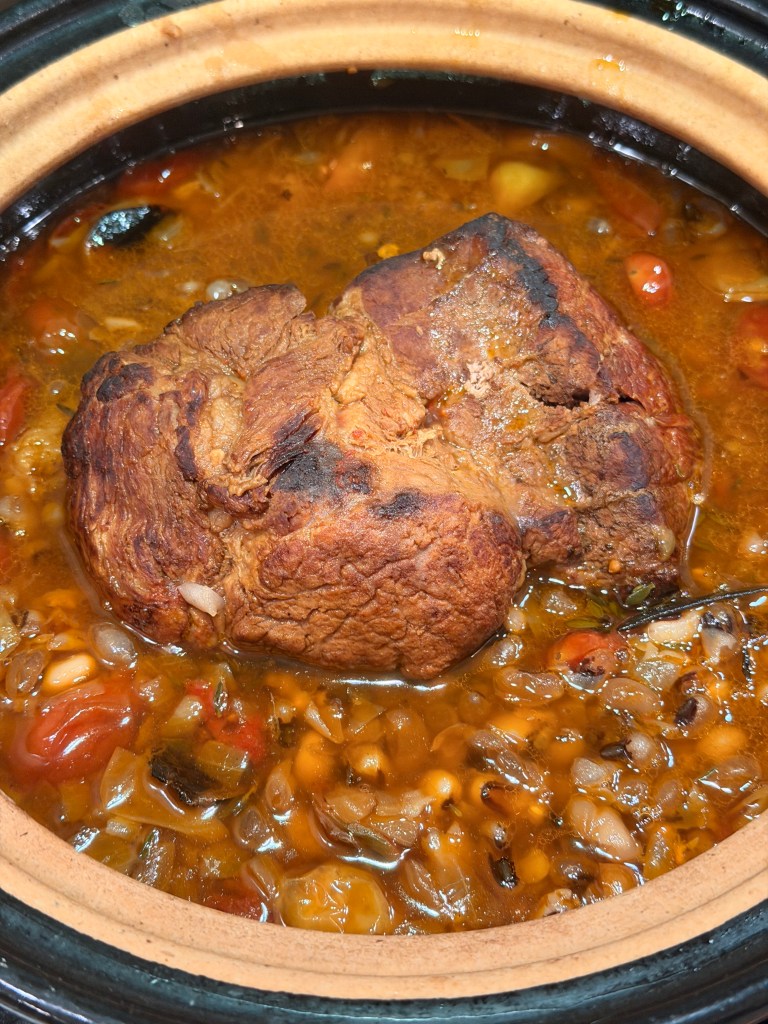
Ingredients
- Salted butter
- 2 onions
- About 4 cups cherry tomatoes (I get the Wild Wonders family pack)
- Salt
- Pork shoulder
- Dry white wine (my go to is Kim Crawford sauvignon blanc)
- Parmigiano rind or two
- Rosemary
- Thyme
- 3 bay leaves
- About 1 teaspoon black peppercorns
- (Optional) your choice of vegetables within reason
Preparing the base
Melt a few tablespoons of butter in the bottom of a braising pan big enough to comfortably fit the pork shoulder.
Dice the onions and add them to the pan. Sauté them over medium low heat until translucent. Stir often and try not to let them brown.
Meanwhile, slice all the cherry tomatoes in half through the meridien.
When the onions are all consistently translucent, add the tomatoes to the pan and stir everything until it’s evenly mixed. Continue to sauté over medium low heat until the tomatoes have *all* started to collapse and release their liquid. The aroma will develop from fresh and fruity into rich and caramelized. Still stir often and try not to let them brown.
Searing the pork shoulder
Lay your pork shoulder on a cutting board and pat it dry with paper towels. Salt it abundantly on every surface, patting the salt down so it sticks.
Add some butter to a separate frying pan and set it over medium high heat. Turn on your vent fan.
Brown the pork shoulder deeply on all sides, then nestle it into the braising pot with the onions and tomatoes.
Braising the pork shoulder
Deglaze the searing pan with white wine, then pour that wine into the braising pot. Top up the braising pot with wine until it covers all the onions and tomatoes and submerges about an inch of the pork shoulder.
Increase the heat to high. While the wine comes to a boil, nestle your parm rinds in with the onions and tomatoes, making sure they’re fully submerged in wine. Nestle the herbs in the liquid, trying to keep all the stems together so they’re easy to remove later. Add the bay leaves and the peppercorns.
Let the wine boil until the sharp aroma of alcohol fades away. Then put the lid on the pot.
Bring the heat down until the pot maintains a low simmer; the setting will be different depending on your pot and your stove. Don’t be perfectionistic about it, just pick a setting and come back to adjust in 15 minutes.
Keep the pot on a low simmer for 3-4 hours, checking consistently to make sure that the liquid isn’t drying up. About an hour in, the pork shoulder will start to release its own liquid into the pot; have patience and let it happen. After the second hour, start checking occasionally to see if you need to top up the liquid with water, wine, or stock (your preference).
Finishing the braise
At the 4 hour mark, the pork should be ready to shred. But first, remove the herbs and parmesan rind from the pot.
I shred my pork shoulder by just nudging it with tongs until it falls apart. If it’s taking a lot of effort, it’s probably not ready. Give it another half hour and try again.
As you shred, you will come across some chunks of connective tissue with no meat on them. Set them aside to discard when they cool off.
Mix the shredded meat with the onions and tomatoes.

This can be a finished dish as is, or you can add vegetables at this stage and then cook it for another twenty minutes or so before serving.
For the photo above, I added black eyed peas.
To emulate the way my grandmother typically prepared sinigang, you could add chopped cabbage, a whole box of spinach, chopped green beans, and diced turnips.
I serve this meal with steamed white rice, but I’m sure it would do well served over polenta or a minimalist risotto, or even plated simply with a side of crusty sourdough.
 Malefic Manach Test
Leave a comment