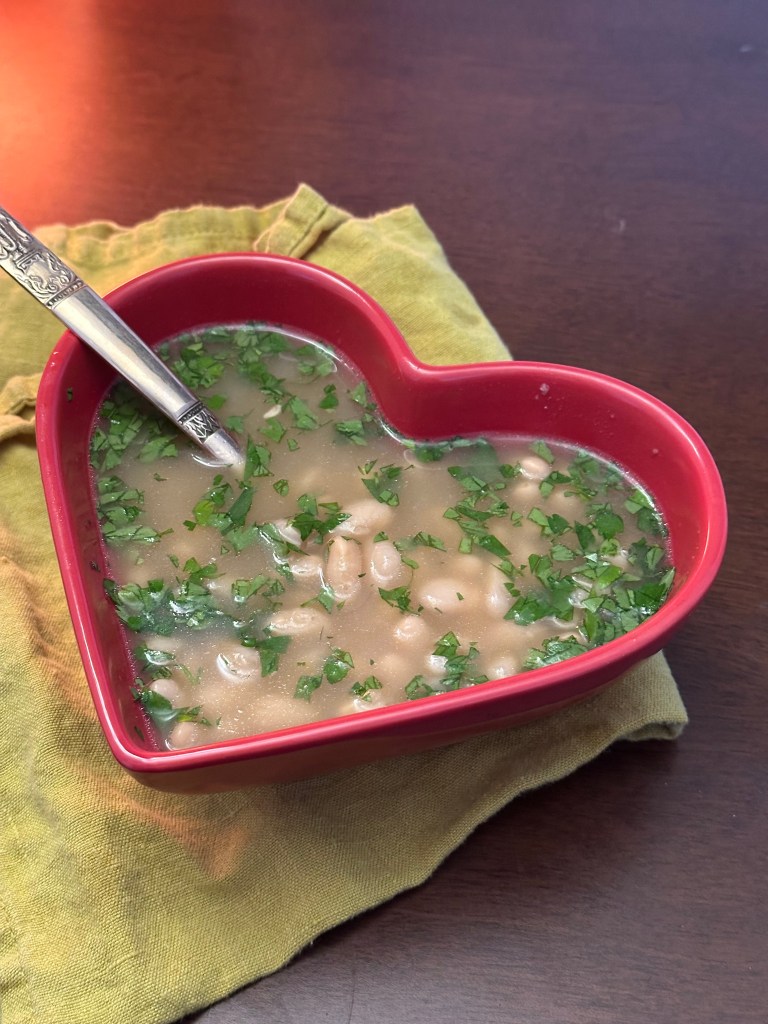
I have bipolar 2 that manifests uniquely without depressive episodes, and I’m a rapid cycler, so I spend one week hypomanic and one week off in a neverending spiral. I didn’t start getting better until I gave up trying to *stop* having episodes and started working on *accommodating* my hypomania, a gargantuan task that has taken me through quite the metamorphosis, and has also coincided with my long term Pluto transit (he’s in Gate 41 of Contraction) with my natal Saturn (in Gate 30 of Feelings).
My friend Rae and their aspirationally Aquarian Instagram account @literatureandlentils exposed me to the benefits of cooking dry beans gradually over years of friendship, and when I hit rock bottom last winter, I finally bit. Since then beans have become something of a lifestyle fixation.
While hypomanic I don’t have much of an appetite, but there’s something about the creamy texture and gentle flavor of beans and the panacea nature of lemony, herby chicken stock that makes bean soup just *work.* Since last winter I’ve developed a bean soup routine that could carry me through any crisis, including the one I’m having today, having woken up at 1:45 am after 3 and a half hours of sleep feeling peppy and energized and ready for the day ahead, as one should usually *not.*
During the longest nights of last winter, there was really nothing for me to get out of bed for. The massage therapist I was working with at the time had been flaky, so I was in poor physical condition; getting up was painful and difficult, and nothing seemed worth it. But when I hauled my ass out of bed at the beginning of every day and set a pot of bean soup on the stove, it changed my feng shui, and that in turn changed my energy. Tendrils of soup smell reached through the house and pulled me out of my spiraling thoughts into reality.
Folks who have been on their own healthy eating journey will know firsthand that when you’re actually getting in all the micronutrients your brain needs to function, you actually start to feel better… not only physically, but also emotionally. Between the daily doses of beans and the occasional rice, with all that lemony Vitamin C and the bright terpenes of the herbs, my mental health literally did get better. It took the same time span I would normally expect from a new medication, 6 weeks. Yes, it was objectively insane of me to fixate on bean soup for all my meals for 6 weeks, but having a rapid cycling psychotic illness makes that kind of thing a bit moot.
Ingredients
- 8 ounces of dry beans, sorted and rinsed
- 32 ounce container of chicken stock
- Salt to taste (I use sel gris)
- About 1 teaspoon whole black peppercorns
- 2 bay leaves
- 1 parmesan rind
- Rosemary
- Thyme
- (Optional) 1/2 cup dry rice (do not add at start of cooking)
Finishing
- 1 lemon
- 1 cup parsley
- 1 chonky garlic clove
- Extra virgin olive oil (I use Flamingo Estate)
Method
Select a pot that’s big enough for your beans to expand to at least three times their dry volume.
Weigh out your beans and add them to the pot with all the chicken stock in the 32 ounce container. Add salt to taste. Hesitate to add more salt if you’re unsure.
Set the pot over high heat and bring the chicken stock to a confident rolling boil.
When the pot is boiling, add all your aromatics. Some people also throw in a carrot, onion, or skin-on garlic at this point for extra flavor infusion. Don’t add anything acidic (citrus, tomatoes, etc) – adding acid at the start of cooking can prevent the beans from becoming tender and creamy.
Bring the temperature down to a *gentle* simmer, barely bubbling. Cook over low heat, maintaining a bare bubble, for hours, depending on what type of beans you used and their freshness. I buy from Primary Beans and Rancho Gordo and my usual time frame is two to three hours, though bigger or more thicc beans like chick peas may take six to eight. This is something that’s good to start in the morning and expect to take all day.
Check the pot every 15-20 minutes to make sure there’s enough liquid and note the state of your beans. Add water or stock if necessary, to make sure all the beans remain fully immersed.
The beans are done cooking when you blow on them and the skin curls back. If there’s no visual movement, they’re not ready. Even once the skin starts to curl, taste test a few beans to make sure they’re consistently cooked the way you like them. If your dry beans come from mixed harvests they may cook at different rates.
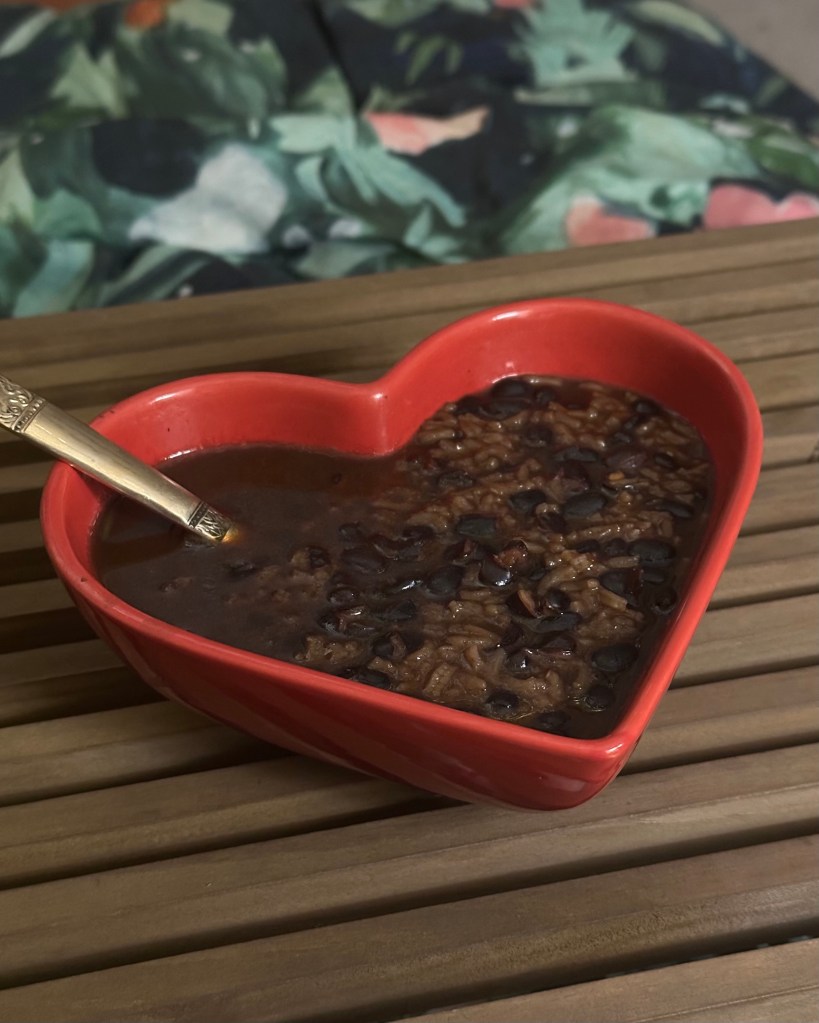
Congee
If you want to add rice to make beans and rice congee, wait until the beans are mostly cooked through, with only a little bit of dry starchy texture in the middle when you cut them with a spoon (like al dente pasta). If you feel uncertain, it’s okay to wait until the beans are done cooking to add the rice.
Based on my experience, I would recommend adding rice to more physically robust beans that tend to be fudgy rather than buttery. Red, black, and variegated beans stand up better to the rice than white beans and runner beans.
Finishing the soup
After the beans are fully cooked to a velvety creamy texture, I like to add lemon juice to the soup because I love how I feel when I have extra Vitamin C in my system. During most of the winter when I wasn’t well enough to store fruit without them rotting on the counter, I actually used powdered lemon juice concentrate to great avail. These days this is how I finish my soup:
Finely chop about a cup of parsley and add it to a bowl. Put a peeled clove of garlic through a garlic press and add it to the bowl. Zest half to a whole lemon into the bowl. Add salt and a *light* drizzle of extra virgin olive oil. Mix these together until nicely combined. Voila. You have made gremolata. I love this topping for everything Mediterranean, but its most frequent use in my household is to add zest for life to a simple bean soup.
Juice the lemon you zested; add all the juice to the bean soup.
Ladle your bean soup into the bowl you intend to eat it out of, and add gremolata to taste (be generous). Drizzle a touch of olive oil over the top, and then mix everything together. Lean in and smell the soup.
Storing and using extra beans after you’ve had your fill of soup
I store my leftover beans in glass jars in the stock they cooked in. They make a great basis for other soups in that form, or you can treat them exactly the same as canned beans and use them in any bean recipe you imagine.
The beans will carry the flavor of the cooking aromatics, the chicken stock, and the lemon. This is usually a benefit, but some folks want to make sure they align their bean recipes with the predominant chicken flavor, and for example wouldn’t want to use these chickeny beans to make tonno e fagioli or chili con carne.
 Malefic Manach Test
Leave a comment